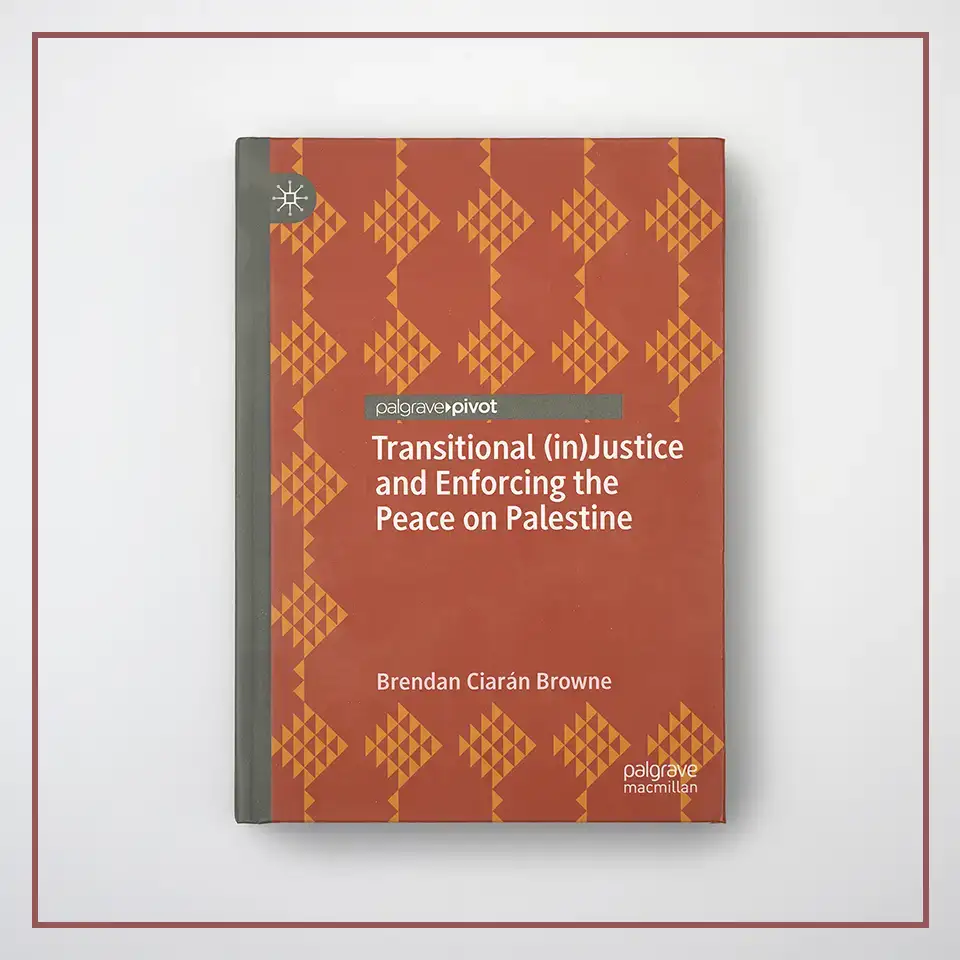
Transitional (in)Justice and Enforcing the Peace on Palestine (Rethinking Peace and Conflict Studies)
16 February 2023
by Brendan Ciarán Browne
This book considers the growing interest in transitional justice practices that take place against the backdrop of ongoing settler-colonialism in Palestine. By critiquing the role of common top-down and bottom-up interventions, namely truth recovery and international criminal justice, the book argues that transitional justice acts as an extension of a deeply flawed peacebuilding process that has been so destructive in Palestine and has a deflating effect when it comes to advancing calls for meaningful decolonisation. A ‘radicalisation’ of transitional justice that takes place in settler-colonial contexts, one that prioritises conversations around meaningful decolonisation, is therefore required. The book will appeal to those with an interest in peacebuilding, conflict transformation and transitional justice.
Nominated for the 2023, Middle East Monitor Palestine book award
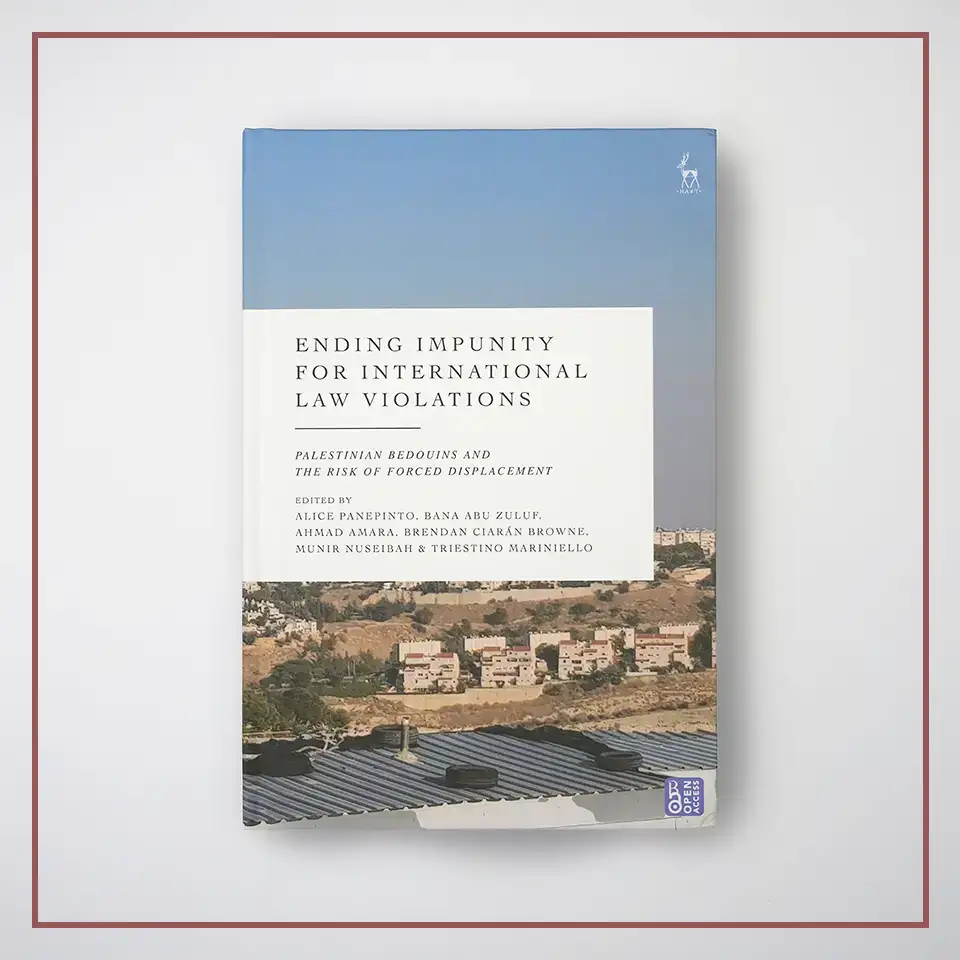
Ending Impunity for International Law Violations: Palestinian Bedouins and the Risk of Forced Displacement
1 May 2025
by Alice Panepinto, Bana Abu Zuluf, Ahmad Amara, Brendan Ciarán Browne, Munir Nuseibah and Triestino Mariniello
This open access edited collection is the first book-length academic publication on the Palestinian Bedouins at risk of forced displacement in the Central West Bank and Greater Jerusalem area.
At its core are two questions: firstly; what are the humanitarian vulnerabilities they face and how are they produced/constructed? And secondly, how does protracted impunity for international law violations drive humanitarian protection risks for them? It interweaves international law, community-based empirical research and interdisciplinary perspectives, to offer the broadest possible framework for understanding these complex and complicated questions.
The ebook editions of this book are available open access under a CC BY-NC-ND 4.0 licence on bloomsburycollections.com. Open access was funded by UKRI.
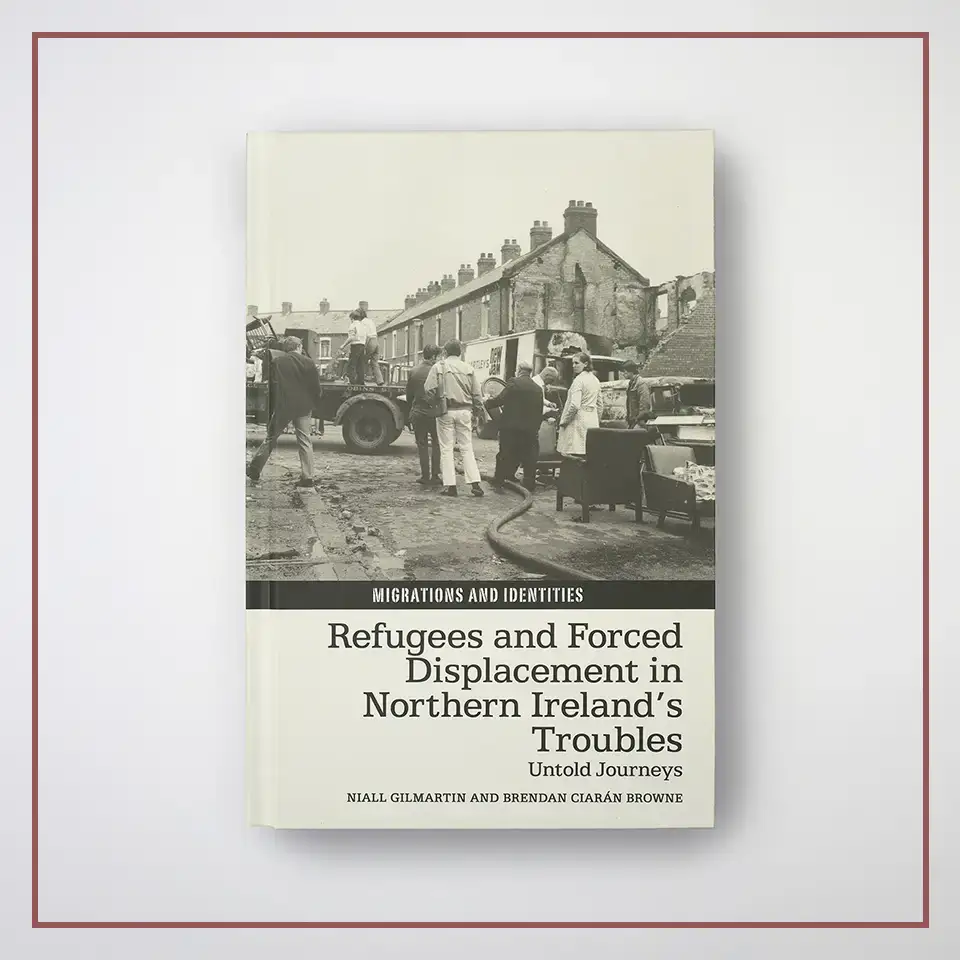
Refugees and Forced Displacement in Northern Ireland’s Troubles: Untold Journeys: 12 (Migrations and Identities
1 January 2023
by Niall Gilmartin and Brendan Ciarán Browne
Though forced displacement constituted a central and pervasive feature of the Northern Ireland 'Troubles' effecting tens of thousands of citizens, remarkably it has been afforded little more than a footnote or fleeting reference in most accounts of the conflict. This book seeks to ‘end the silence’ surrounding this neglected and ubiquitous aspect of the conflict. Based on 88 in-depth qualitative interviews with victims and survivors, and extensive secondary research, this fascinating study provides the first comprehensive examination of forced displacement in Northern Ireland. The analysis presented captures the unique perspectives of those forcibly uprooted over the course of the 30-year conflict and places on historical record their stories and experiences. This thought-provoking work challenges and broadens prevailing understandings of conflict-related violence, harm, and loss in Northern Ireland to demonstrate the centrality of forced movement, territory, and demographics to the roots and subsequent trajectory of the Troubles. In doing so, it shows that to fully understand the eruption and outplaying of the Troubles and its elusive peace, engagement with and understanding of the legacy of forced displacement is crucial.
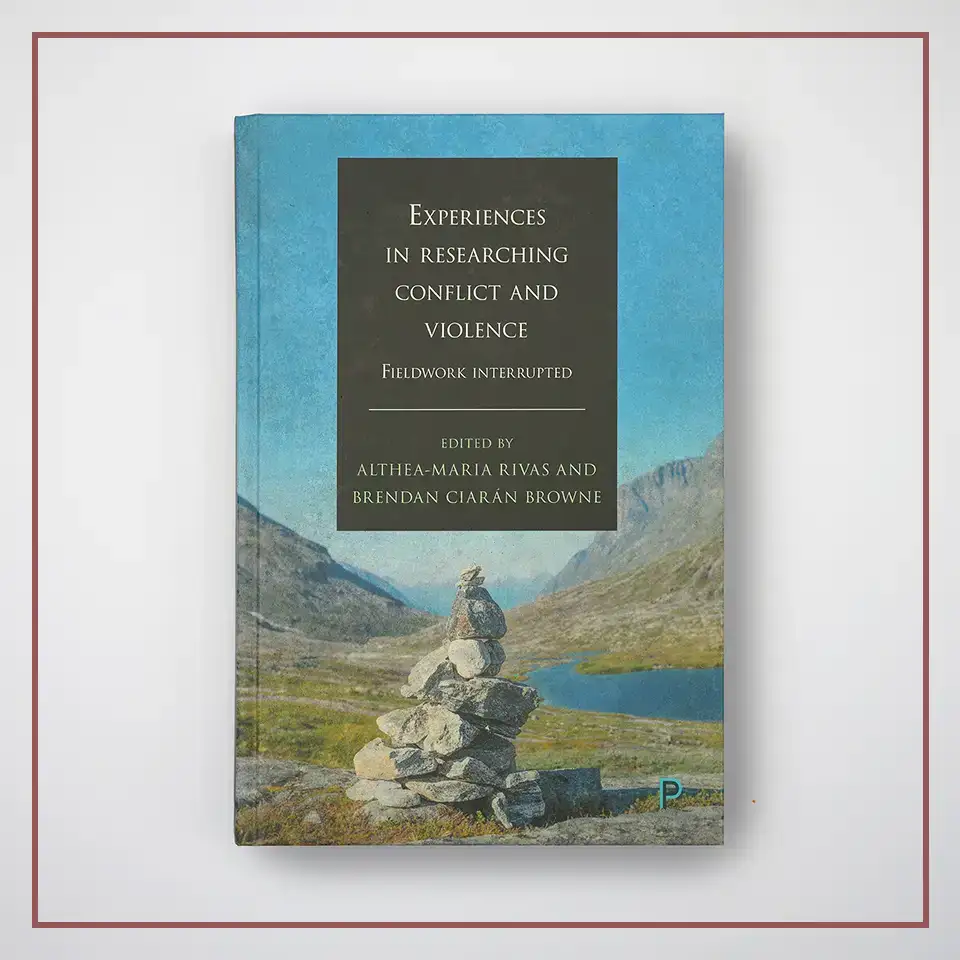
Experiences in researching conflict and violence: Fieldwork Interrupted
17 January 2018
by Althea-Maria Rivas and Brendan Ciarán Browne
This international, edited collection brings together personal accounts from researchers working in and on conflict and explores the roles of emotion, violence, uncertainty, identity and positionality within the process of doing research, as well as the complexity of methodological choices. It highlights the researchers own subjectivity and presents a nuanced view of conflict research that goes beyond the messiness inherent in the process of research in and on violence. It addresses the uncomfortable spaces of conflict research, the potential for violence of research itself and the need for deeper reflection on these issues. This powerful book opens up spaces for new conversations about the realities of conflict research. These critical self-reflections and honest accounts provide important insights for any scholar or practitioner working in similar environments.